60 HOUR LIVE ONLINE CERTIFICATE PROGRAM   |   APRIL 19TH - JULY 13TH, 2026
 

POLYVAGAL TRAUMA THERAPY CERTIFICATE


A somatic, nervous-system–based approach to trauma healing

Stop the trauma feedback loop — at its source.

Trauma doesn’t just live in memory or meaning. It reshapes how the nervous system detects safety and danger.

When that detection system becomes biased toward threat, protection replaces connection. Survival responses interrupt the very relationships and experiences that could support healing — narrowing perception, reinforcing survival patterns, and keeping clients physiologically dysregulated and stuck, even when they understand their trauma.

This is where many skilled interventions reach their limits.

Without the ability to track and work directly with autonomic states, insight doesn’t land, regulation doesn’t hold, and progress stalls.
This Polyvagal Somatic Trauma Therapy Certificate trains you to read, understand, and safely reorganize autonomic patterns in real time — so clients can move from protection into the full range of human experience: connection, curiosity, intimacy, and coherent engagement.
Not by overriding defenses.

Not by forcing regulation.

But through a structured, clinically precise model for sequencing trauma recovery through the nervous system.

ABOUT
FACULTY
FAQs
REGISTER

JOIN US FOR THE LIVE & ONLINE FREE PREVIEW EVENT

DR. ARIELLE SCHWARTZ

JAN WINHALL

Sign up below to join the live online Preview Event for free!

Sunday, March 8th, 2026 from 3 - 4:30pm ET

WHY POLYVAGAL THEORY MATTERS IN TRAUMA WORK?

Polyvagal Trauma Therapy is powerful because it gives practitioners a real-time map for knowing what the nervous system is ready for — and how to work without pushing, collapsing, or overriding protective responses.

Polyvagal Theory explains how the autonomic nervous system continuously evaluates safety and threat through neuroception — outside conscious control.
Rather than viewing regulation and dysregulation as static traits, it describes adaptive survival states that shape perception, behavior, attention, memory access, and relational availability.Understand their trauma and still feel physiologically stuck

  • Ventral Vagal (Social Engagement): access to connection, curiosity, presence

  • Sympathetic Mobilization: fight/flight responses that support action and protection

  • Dorsal Vagal Shutdown: immobilization, collapse, or disconnection when escape feels impossible

In trauma, the nervous system often continues to predict threat even in safe environments. Protective states become persistent, narrowing experience and limiting access to connection and engagement — despite insight, intention, or therapeutic effort.

This is why many interventions stall.

Polyvagal-informed trauma work shifts the focus from content to capacity — from what a client understands to what their nervous system can safely integrate.

Rather than pushing processing or regulation, therapy becomes guided by:

  • The client’s current autonomic state

  • Their actual capacity for activation and connection

  • The timing and sequencing required for safety to emerge

FROM POLYVAGAL THEORY TO PRACTICE

This training supports practitioners in learning how to:

  • Recognize and map autonomic states as they unfold in real time

  • Pace interventions to match nervous system capacity

  • Maintain connection during activation and trauma processing

  • Support shifts from defensive survival into adaptive engagement

  • Interrupt the trauma feedback loop as it’s happening — not after the fact

  • Integrate somatic interventions without triggering overwhelm

You don’t just learn polyvagal theory — you learn how to apply it moment by moment, with precision and care.

Most practitioners have encountered polyvagal concepts through books, talks, or introductory trainings. What’s often missing is a structured framework for knowing what to do when, how to assess readiness, and how to tell whether regulation is actually holding.

This certificate provides that missing structure.

WHAT IS POLYVAGAL THEORY?

Polyvagal Theory describes how the autonomic nervous system continually evaluates safety and threat through neuroception — outside conscious control.

It outlines three primary adaptive survival states:

  1. Ventral Vagal — Social Engagement System

    Regulated physiology → access to connection, curiosity, and presence

  2. Sympathetic Mobilization

    Fight/flight activation → action to manage challenge or escape danger

  3. Dorsal Vagal Shutdown

    Immobilization response → collapse, numbness, disconnection when escape feels impossible

These states influence:

  • behavior

  • attention

  • relational availability

  • memory access

  • clinical engagement

In trauma, the nervous system often continues to predict threat — even in safe environments.

Autonomic protection becomes constant, persistent, and costly.

Polyvagal-informed therapy works directly with these physiological shifts to:

  • Assess the client’s state and capacity

  • Support regulation that can withstand activation

  • Sequence trauma work without overwhelm

  • Reorganize how safety is detected

  • Retire survival responses that are no longer needed

Therapy becomes guided by what the system is ready for — not solely by narrative content.


MEET YOUR FACULTY

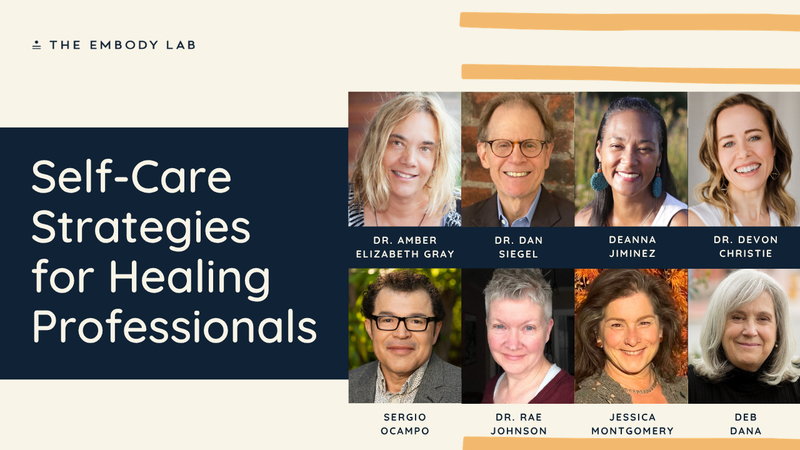
Internationally recognized leaders bring to life a holistic and unified somatic curriculum.

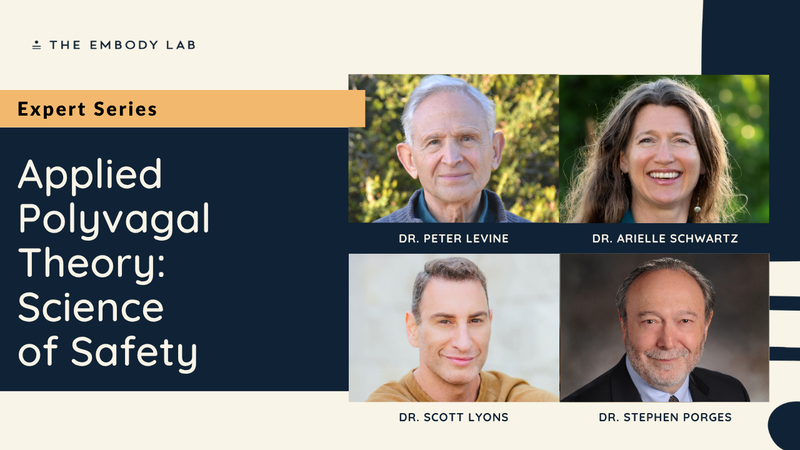
DR. SCOTT LYONS

Clinical Psychologist, Somatic Therapist, and founder of The Embody Lab

DR. JANINA FISHER

Licensed Clinical Psychologist and International Trauma Specialist

READ BIO →
READ BIO →

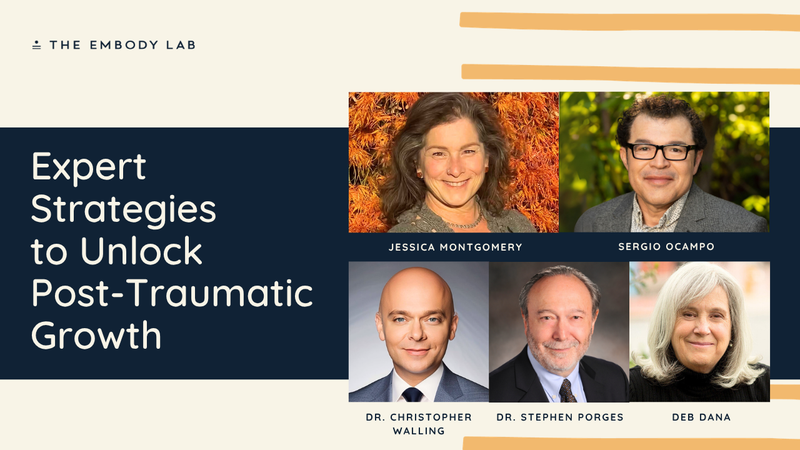
DR. STEPHEN PORGES

Psychologist, Neuroscientist, and Developer of Polyvagal Theory

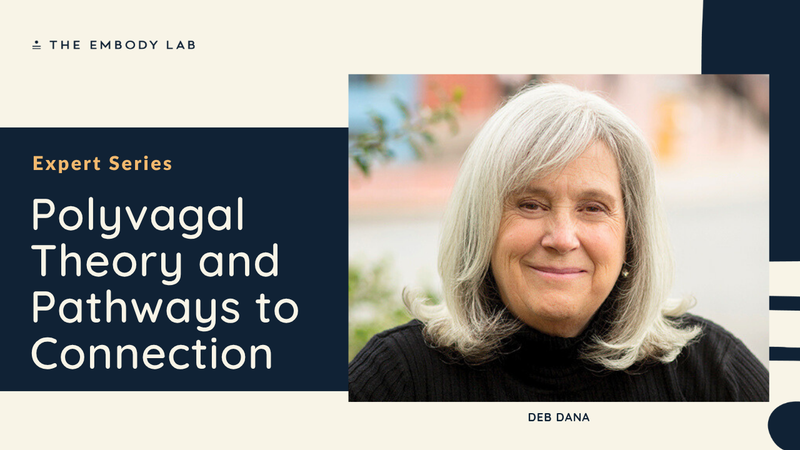
DEB DANA, LCSW

Polyvagal Theory & Complex Trauma Specialist, Clinician, and Author

READ BIO →
READ BIO →

LINDA THAI, LMSW

Somatic therapist, Integrative Trauma Therapist, Educator and Speaker

JAN WINHALL

Author, Teacher and seasoned Trauma & Addiction Psychotherapist

READ BIO →
READ BIO →

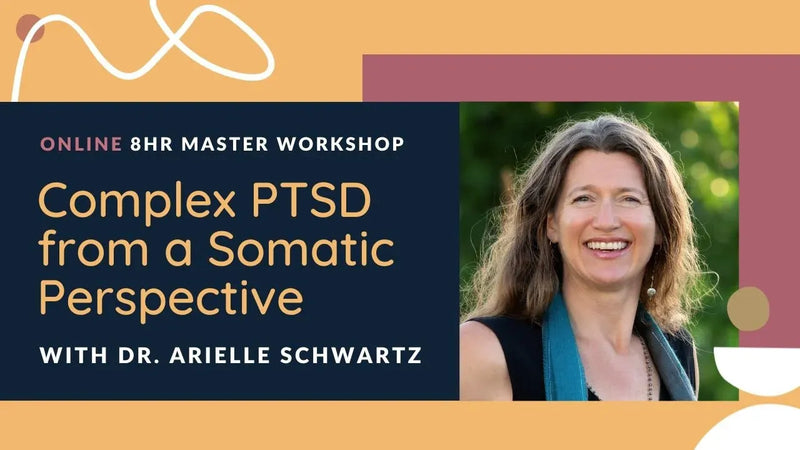
DR. ARIELLE SCHWARTZ

Clinical Psychologist and Somatic Trauma Specialist

BG MANCINI, AP, MHSc

Neurodevelopmental Specialist and founder of The Brain & Gut Institute

READ BIO →
READ BIO →

WHAT YOU’LL LEARN

This program supports practitioners in developing the capacity to work in real time with the nervous system, so intervention is guided by readiness rather than assumption.

You’ll learn how to:

Recognize and map autonomic states and blended survival responses

Track nervous system capacity moment by moment — not just symptom presentation

Pace intervention to match actual physiological readiness

Maintain connection during activation and trauma processing

Support shifts from defensive survival into adaptive engagement

Interrupt the trauma feedback loop as it’s happening, not after the fact

Integrate somatic interventions without triggering overwhelm or shutdown

You don’t just learn the method — you practice the method with expert guidance, building confidence in how to respond when the nervous system shifts.

You will leave with a reliable pathway for guiding change — rather than hoping regulation sticks.

 
REGISTER NOW →
 

CURRICULUM HIGHLIGHTS


Throughout this certificate, you’ll apply these principles across a wide range of clinical contexts, learning how to:

✔ Detect blended autonomic states, dissociation, and freeze physiology in real time

✔ Work with developmental trauma, preverbal memory, and procedural patterns

✔ Use felt-sense titration to safely access and reorganize traumatic material

✔ Expand social engagement through relational co-regulation

✔ Support clients with chronic pain, dysautonomia, and persistent activation

✔ Shift threat perception by updating neuroception

✔ Integrate breath, vagal toning, and somatic practices to build durable capacity

✔ Contextualize autonomic states within cultural and systemic trauma

✔ Guide identity and relational shifts during integration

Not just learning techniques — learning how to sequence them with precision.

REGISTER NOW →

THE TRAUMA FEEDBACK LOOP

Trauma alters how the nervous system detects and prioritizes safety and danger.

When neuroception remains biased toward threat, protective responses activate rapidly and automatically — even in environments that are objectively safe. The system organizes around protection rather than connection, narrowing perception and limiting available responses.

Over time, this creates a self-reinforcing trauma feedback loop:

Rather than resolving, survival responses become predictive, persistent, and costly.

What the Trauma Feedback Loop Maintains

When this loop remains active, it often shows up as:

  • Chronic hypervigilance, shutdown, or oscillation between the two

  • Ongoing physiological dysregulation despite insight or intention

  • Repetitive relational patterns shaped by protection rather than choice

  • Survival-based identity and a narrowed sense of self

  • Limited access to engagement, vitality, pleasure, and connection

This is not a failure of motivation, awareness, or effort — it is a nervous system doing exactly what it learned to do to survive.

How This Training Interrupts the Loop

This training intervenes inside the trauma feedback loop, in real time, by:

  • Identifying early autonomic shifts before defenses fully mobilize

  • Tracking what is driving protection at the level of neuroception

  • Slowing or interrupting defensive momentum without overriding safety

  • Expanding access to a broader range of physiological and relational responses

  • Supporting the nervous system in updating safety through lived experience — not explanation

When the trauma feedback loop reorganizes at the autonomic level, clients regain access to connection, curiosity, agency, and emotional availability without the system defaulting back to survival.

SECURE YOUR SPOT →

“I've read the Polyvagal books. I've taken the introductory trainings. This is the first program that taught me what to actually do when a client drops into shutdown.”

— ROBIN M., STUDENT

The Six-Phase Polyvagal Trauma Therapy Model

A clinically structured progression aligned with autonomic readiness:

Each intervention is applied at the right phase → the right moment → for the right nervous system.

This is trauma therapy with readiness, clarity, and clinical precision.

RESERVE MY SPOT →

WHAT MAKES THIS CERTIFICATE UNIQUE


Most trauma programs teach tools.

This certificate teaches how autonomic patterns form, stabilize, and heal.

Rather than offering a collection of techniques, this program is built around understanding how autonomic organization shapes perception, behavior, and relationship — and how to work with it in ways that support lasting recovery.

This is not a lecture series or a passive webinar.

It is 60+ hours of live, experiential training with demonstration, guided practice, and supported integration.

What makes this certificate unique is its emphasis on pattern literacy, sequencing, and embodied precision.

You learn how to::

  • Read autonomic organization across states, not just momentary activation

  • Match intervention to current capacity and developmental history

  • Prevent overwhelm by sequencing safety, activation, and integration

  • Work with dissociation as an adaptive organizing principle

  • Track autonomic change that stabilizes and generalizes

Polyvagal Somatic Trauma Therapy is not a loose collection of techniques.

It is a coherent, nervous-system–based pathway for restoring safety, flexibility, and access to connection in systems shaped by trauma.

By working with autonomic organization rather than symptoms alone, this approach:

  • Reduces guesswork without rigid protocol

  • Lowers retraumatization risk through pacing and sequencing

Supports changes that extend beyond the session and into daily life


HOW THE CERTIFICATE WORKS


SCHEDULE BREAKDOWN

24 Live Classes

April – July 2026

Mondays + Wednesdays

60+ hours of applied training


EVERY CLASS INCLUDES

Clinical demonstrations

Partner practice sessions

Faculty guidance + Q&A

Application bridging theory → practice

All sessions recorded for flexible access.

 PROGRAM REGISTRATION


THE LIVE PROGRAM BEGINS APRIL 19th
REGISTER FOR THE CERTIFICATE NOW

PAYMENT PLAN AVAILABLE AT CHECKOUT.
Upon registration you will receive a welcome email with details on how to access the program.
You will have lifetime access to the on-demand training sessions.


Program valued at $1493
Pay only...


$1227 USD

SAVE $266 AND JOIN THE REVOLUTION OF COMING HOME TO THE BODY!


PAYMENT PLAN AVAILABLE AT CHECKOUT

“Finally, a Polyvagal program that actually shows me how to work with the body.”


REGISTER NOW →

WHY SOMATICS AND THE FELT SENSE MATTER IN TRAUMA RECOVERY


Trauma protection lives in the body — not just in memory, meaning, or story.

Survival responses are organized through sensation, posture, breath, impulse, and autonomic state. When intervention focuses only on insight or narrative, the nervous system may remain unchanged — continuing to predict threat even when clients understand what happened.

Somatic work brings attention to the felt sense: the body’s immediate, pre-verbal experience of safety, danger, and readiness.

In this training, somatics are used not as add-on techniques, but as a primary clinical compass. Practitioners learn to work with sensation as information — guiding pacing, sequencing, and decision-making in real time.

This approach allows you to:

  • Use interoceptive awareness to track protection and capacity moment by moment

  • Work directly with sensation to titrate traumatic material without overwhelm

  • Support shifts in autonomic state before adding narrative or meaning

  • Use the felt sense to update neuroception through experience — not explanation

Rather than asking clients to push through sensation or interpret it cognitively, you’ll learn how to help them stay safely present with what the body is doing — so change occurs at the level of physiology, where trauma is actually held and resolved.

 
REGISTER NOW →

PROGRAM DETAILS

PROGRAM SCHEDULE

This 60 hour certificate program will run live and online from April 19th to July 13th, 2026. The program will include 24 classes over 12 weeks, all available to watch online and on-demand at your own pace. There will also be a Student Orientation and two optional Community Connection sessions.

All sessions can be completed via your online Content Library which you will gain access to upon registration.

Student Orientation (1,5 hours): Sunday, April 19th, 2026 from 6 - 7:30pm ET

Live Sessions (Weekdays, 60 hours total)

  • Weekday modules with lectures, demos, and experiential practices.

  • Mondays from 6 - 8:30pm ET

  • Wednesdays from 11:30am - 2pm ET

  • One class on Thursday, June 4th, 2026

  • No classes on Wednesday, June 3th and Monday, June 6th, 2026

Community Connection & Practice Sessions (3 hours)

  • Peer integration space.

  • Dates: Tuesday, May 19, 2026 from 6 - 7:30pm ET and Thursday, June 11, 2026 from 3 - 4:30pm ET.

See how this translates into your timezone.

HOMEWORK

There are no homework assignments during the program.

LEARNING PLATFORM FORMAT

ZOOM: The live portion of the certificate program will be offered online using the video conferencing platform Zoom, in meeting format, to allow instructors and students to interact, ask questions and participate in breakout sessions.

ONLINE LEARNING PLATFORM: The online learning platform will host all the information about the course including:

  • Detailed schedule and reminder emails of upcoming sessions

  • How to access the live sessions via Zoom

  • Supporting materials such as PDFs of the reading material and presentations

ACCESSIBILITY

VIDEO / AUDIO: Within the online learning platform, students may watch the video within their online library or download the video or audio to their computer. They will have lifetime access to the content.

LIVE CAPTIONING / TRANSCRIPTS: Captioning during live sessions and transcripts will be offered in English.

READING LISTS: Each instructor will provide required or recommended readings.

  • Required readings will be available freely online or in PDF format.

  • Recommended readings are optional and for futher exploration. They may include books, online articles etc.

  • PDFs of the instructor’s presentation will also be provided.

CERTIFICATE OF COMPLETION

Below are the requirements to receive the Certificate of Completion within 3 months of the last live session:

  • Attend the live sessions or watch the recordings.

  • Complete the Self Evaluation & Reflection after each module. (Please note: This should be completed within 3 months after the last live session.)

  • Complete 4 sessions (45 mins or longer) outside of class times. A session is considered a practice together with the application of the tools learned.

  • Submit full payment.

REGISTRATION / ENROLLMENT / TUITION

Enroll for the certificate program here. Once you register, you will receive a welcome email with how to access all the details for the certificate program. A variety of payment plan options are available at checkout.


FREQUENTLY ASKED QUESTIONS


+ Who is this program designed for?

This program is a certification process that distills an educational methodology to integrate into a variety of modalities such as: Social Workers, Mental Health & Pastoral Counselors, Yoga Therapists / Yoga Teachers, Movement Therapists, Coaches, Physicians (MD, DO, ND, DC & others) & Physician Assistants, Nurses & Nurse Practitioners, Psychologists, Emergency Medical Personnel, Meditation Teachers, Educators, Massage Therapists, Acupuncturists & Body Workers, Hypnotherapists, Kinesiologists, Complementary & Alternative Medicine Professionals, Clergy & Religious Leaders, other Wellness Professionals.

This is an education program and not a licenser program.

+ What are the dates, schedule and time commitment?

This 60 hour certificate program will run from April 19th to July 13th, 2026. A detailed schedule will be provided when registering. All live sessions will be recorded and students may watch in their own time:

All sessions can be completed via your online Content Library which you will gain access to upon registration.

Student Orientation (1.5 hours): Sunday, April 19th, 2026 from 6 - 7:30pm ET

Weekly Classes: Monday, April 20th, 2026 through Monday, July 13th, 2026 on:

  • Monday, April 20, 2026 from 6 - 8:30pm ET
  • Wednesday, April 22, 2026 from 11:30am - 2pm ET
  • Monday, April 27, 2026 from 6 - 8:30pm ET
  • Wednesday, April 29, 2026 from 11:30am - 2pm ET
  • Monday, May 4, 2026 from 6 - 8:30pm ET
  • Wednesday, May 6, 2026 from 11:30am - 2pm ET
  • Monday, May 11, 2026 from 6 - 8:30pm ET
  • Wednesday, May 13, 2026 from 11:30am - 2pm ET
  • Monday, May 18, 2026 from 6 - 8:30pm ET
  • Wednesday, May 20, 2026 from 11:30am - 2pm ET
  • Monday, May 25, 2026 from 6 - 8:30pm ET
  • Wednesday, May 27, 2026 from 11:30am - 2pm ET
  • Monday, June 1, 2026 from 6 - 8:30pm ET
  • Thursday, June 4, 2026 from 11:30am - 2pm ET
  • Monday, June 8, 2026 from 6 - 8:30pm ET
  • Wednesday, June 10, 2026 from 11:30am - 2pm ET
  • Monday, June 15, 2026 from 6 - 8:30pm ET
  • Wednesday, June 17, 2026 from 11:30am - 2pm ET
  • Monday, June 22, 2026 from 6 - 8:30pm ET
  • Wednesday, June 24, 2026 from 11:30am - 2pm ET
  • Monday, June 29, 2026 from 6 - 8:30pm ET
  • Wednesday, July 1, 2026 from 11:30am - 2pm ET
  • NO CLASS - Monday, June 6, 2026
  • Wednesday, July 8, 2026 from 11:30am - 2pm ET
  • Monday, July 13, 2026 from 6 - 8:30pm ET

Community Connection & Practice Sessions (3 hours):

  • Tuesday, May 19, 2026 from 6 - 7:30pm ET
  • Thursday, June 11, 2026 from 3 - 4:30pm ET

A detailed schedule will be provided upon registration. Because of the complexities with international time zones, we have only listed U.S. Eastern Time (ET) above. See how this translates into your timezone.

+ Will there be an orientation session?

Yes, there will be an orientation session on Sunday, April 19, 2026 from 6 - 7:30pm ET.

+ Do I need to attend live or am I able to watch recordings?

All live sessions will also be recorded so students may watch in their own time (more information below). Please note, captioning is only available during the live sessions.

+ How can I interact with the instructors? Will I receive guidance?

During each of the live sessions, the instructors will have a Q&A period where you may ask questions. Two Community Connection sessions will also be offered with the faculty. A private online community forum will be provided for the certificate.

+ Do you offer scholarships?

For every 200 enrolled students, we are able to offer:

  • 10 Full Scholarships (100%)
  • 10 Partial Scholarships (50%)

How to Apply:

  • Please complete this scholarship form 11:59pm ET on Saturday, March 28, 2026.
  • Scholarship results will be communicated by end of day Sunday, April 5, 2026.

+ What are the homework requirements?

There are no homework assignments during the program.

+ Is there a deadline for registration?

Please register by the day before the program begins.

+ Do you offer refunds?

We offer a Registration Guarantee which means that if you register but decide the course isn’t right for you, we’ll refund your course fee - no questions asked - up to 48 hours before the course start date. No refunds are available after this time or once the program commences.

+ How can I access the online course and recordings?

ZOOM FOR LIVE SESSIONS: The live portion of the certificate program will be offered online using the video conferencing platform Zoom, in meeting format, to allow instructors and students to interact, ask questions and participate in breakout sessions.

ONLINE LEARNING PLATFORM: Once you register, you will receive access to our online learning platform which will include all the information about the certificate, including:

  • Detailed schedules
  • How to access the live sessions via Zoom
  • Recordings of all live sessions uploaded within 48 hours of the end of the live session
  • Supporting materials provided by your instructors

ACCESSIBILITY | Video / Audio: Within our online learning platform, you may watch the video within your online library or download the video or audio to your computer. You will have lifetime access to the content.

ACCESSIBILITY | Live Captioning / Transcripts: Captioning will be available during the live sessions. Transcripts will be offered in English.

ACCESSIBILITY | Reading Lists: The reading list will include items available at the public library or will be provided as a PDF where possible. PDFs of the instructor’s presentation will also be provided.

+ Is this a summit?

No, this is an integrated curriculum co-created by the faculty. The faculty are colleagues in this program. They are working together to make sure each individual module is cohesive with the entire curriculum. Every teacher is informed about what is coming before and what is coming after and integrating their curriculum based on that information.

+ Is this a theoretical or practical (experiential) program?

While some theory will be presented to support the learning, the primary focus of the practice is experiential, giving practical tools for the participants.

+ Will I receive a certificate?

You’ll receive a Certificate of Completion once you have completed the following:

  • Attended the live sessions or watched the recordings.
  • Completed the Self Evaluation & Reflections after each module. (Please note: This should be completed within 3 months after the last live session.)
  • Completed 4 sessions (45 mins or longer) outside of class times. A session is considered a practice together with the application of the tools learned.
  • Submitted full payment.

All students who complete this program will receive a Certificate of Completion whether they attend it LIVE or watch the RECORDINGS.

+ What title can I use after completing this program?

Licensed therapists or health professionals (e.g., social workers, psychologists, clinical therapists, registered nurses) may use the title “Applied Polyvagal Trauma Practitioner.”

Non-licensed individuals may say: “I integrate applied polyvagal trauma interventions into my practice.”

+ Will Continuing Education (CEs) be offered?

CEs are available for Health Professionals upon completion of the live training. Please note - Live attendance is required.

To register your interest for CEs for this program and more detailed information, please visit this link: https://forms.gle/76mwhjgG5vnzVw9BA

Below is more information on the health professionals which may be eligible for CEs through the Spiritual Competency Academy (SCA) which is co-sponsoring this program.

  • CEs for psychologists are provided by the Spiritual Competency Academy (SCA) which is sponsoring this program. The Spiritual Competency Academy is approved by the American Psychological Association to sponsor continuing education for psychologists. Spiritual Competency Academy maintains responsibility for this program and its content.
  • The California Board of Behavioral Sciences accepts CE credits for LCSW, LPCC, LEP, and LMFT license renewal for programs offered by sponsors of CE who are approved by the American Psychological Association.
  • LCSW, LPCC, LEP and LMFTs, and other professionals from outside of California need to check with their state licensing board as to whether or not they accept credits from programs offered by approved sponsors of CE by the American Psychological Association.
  • SCA is approved by the California Board of Registered Nursing (BRN Provider CEP16887) for licensed nurses in California. RNs must retain their certificate of attendance for 4 years after the course concludes. Nurses outside of California must confirm acceptance with their licensing boards.
  • For questions about your certificate or the content, logistics, or other support issues regarding this course, please contact The Embody Lab at info@theembodylab.com.
  • For questions about whether APA CE is valid for you, contact your licensing board directly.
  • For general questions about APA CE, contact SCA at ce@spiritualcompetencyacademy.com.

FROM A DIFFERENT STATE OR COUNTRY?

Health professionals from a state or country outside of California need to check with their licensing boards as to whether or not they accept programs offered by approved sponsors of Continuing Education by the American Psychological Association (APA).

DIFFERENT CREDENTIAL?

If your credential is not listed, please check with your licensing board as to whether or not they accept programs offered by approved sponsors of Continuing Education by the American Psychological Association (APA).

The SCA and The Embody Lab are not able to determine your eligibility.

“The six-phase model changed how I think about pacing. I'm no longer guessing when to resource versus when to process.”

— MARCUS J., STUDENT

OUTCOMES YOU CAN BRING INTO PRACTICE IMMEDIATELY

This training is designed to integrate seamlessly with the work you already do.

Rather than replacing existing modalities, it gives you a nervous-system–based orientation that enhances how and when you apply them — so interventions land safely and hold.

You’ll bring into practice:

  • Greater stability and relational connection throughout trauma sessions

  • Increased client capacity to tolerate activation without overwhelm

  • Clear, embodied decision-making about when and how to intervene

  • Confidence working with freeze, shutdown, and dissociation

The tools and frameworks you learn can be applied alongside approaches such as EMDR, Internal Family Systems–informed work, Somatic Experiencing, and other trauma-informed modalities — improving pacing, sequencing, and nervous-system readiness across methods.

Healing becomes not just possible — but trackable, structured, and supported by physiology.

SECURE YOUR SPOT →

JOIN US

Support trauma recovery by addressing what keeps clients stuck — with methods that are grounded, relational, and physiologically intelligent.

SECURE YOUR SPOT →
BACK TO ALL CERTIFICATES →